
Process optimization is the systematic practice of analyzing and improving workflows to reduce waste, lift quality and increase throughput. The 12 strategies in this guide (Lean, SIPOC, process mining, Six Sigma, Value Stream Mapping, Five Whys, 5S, PDSA, TQM, workflow analysis, Kaizen, BPO) are the proven methodological toolkit. Each method has decades of operational evidence behind it.
What changes in 2026 is not the methods themselves but the data foundation under them. Every one of the 12 strategies depends on accurate, current-state operational data to work. Most enterprises do not have it. Standard process documentation captures roughly 30% of how work actually happens. The remaining 70% (manual workarounds, cross-application flows, email handoffs, spreadsheet logic) sits invisible to traditional analysis. Lean cannot eliminate waste it cannot see. Six Sigma cannot reduce variation it cannot measure. Kaizen cannot improve a process its operators do not fully understand.
Process intelligence platforms like KYP.ai supply that data layer continuously. They observe how work actually gets done across every desktop, application and system, then expose the operational reality each of the 12 methods needs to function. This guide walks through all 12 strategies in depth, then maps how process intelligence operationalizes each one.
Key takeaways
- The 12 methods are not in competition. Lean, Six Sigma, Kaizen, Value Stream Mapping and the rest each address different optimization problems. Mature organizations use several in parallel.
- The shared bottleneck is data. Each method assumes accurate current-state operational data. Most enterprises operate on interview-derived estimates and system event logs that capture a fraction of actual work.
- Process intelligence is the data layer. It captures observed human behavior at the desktop level across every application, then surfaces the inputs each methodology requires: waste types (Lean), variation (Six Sigma), bottlenecks (Value Stream Mapping), peak-performer patterns (Kaizen), automation candidates (BPO and BPA).
- Customer outcomes from this approach: Alorica delivered 952% ROI, $2.5M annual savings and 26% automation potential. Hollard saved 307 hours per month on the ticketing triage process by learning how top performers worked. SPS quantified savings across 8,500 employees in 20 countries: 874 hours per month in CX, 599 in Finance, 496 in HR and 543 in Supply Chain Management.
- Adoption signal. 74% of enterprises are adopting process or task mining (Forrester Q4 2024 Tech Leader Survey). Digital Interaction Intelligence is the fastest-growing segment in intelligent automation (Everest Group, 2025).
Recent process optimization trends in 2026
What changes in 2026 is not the methods themselves but the data foundation under them. Every one of the 12 strategies depends on accurate, current-state operational data to work. Most enterprises do not have it. Standard process documentation captures roughly 30% of how work actually happens. The remaining 70% (manual workarounds, cross-application flows, email handoffs, spreadsheet logic) sits invisible to traditional analysis. Lean cannot eliminate waste it cannot see. Six Sigma cannot reduce variation it cannot measure. Kaizen cannot improve a process its operators do not fully understand.
Process intelligence platforms like KYP.ai supply that data layer continuously. They observe how work actually gets done across every desktop, application and system, then expose the operational reality each of the 12 methods needs to function. This guide walks through all 12 strategies in depth, then maps how process intelligence operationalizes each one.
The 12 process optimization strategies you need to know
The 12 strategies below are presented in the same order long-time practitioners typically encounter them. Each section describes the method, a 2026-ready perspective on how to apply it and where the data foundation tends to fail. The final section of this article maps each method to the process intelligence capabilities that fix the data gap.
1. Lean Project Management
Lean project management transforms our understanding of efficiency. In today’s digital ecosystem, we encounter novel forms of waste: redundant data, underutilized software licenses, and inefficient cloud resource allocation.
Fresh Perspective: Consider the concept of “Digital Lean.” This approach applies lean principles to your digital operations, identifying and eliminating virtual waste.
Pro Tip: Implement a “Waste Walk” in your digital environment. Regularly audit your digital tools, data storage, and online workflows to identify areas of inefficiency.
Strategic Impact: Consider the ripple effects of lean digital operations on your entire business ecosystem. By optimizing your digital processes, you’re not just improving internal efficiency — you’re enhancing your ability to respond to market changes, innovate faster, and deliver greater value to customers. This digital lean approach can create a competitive advantage that’s difficult for others to replicate, as it’s embedded in your operational DNA.
Use case example. A mid-sized logistics firm running a fleet of trucks, warehouses and a complex supply chain.
- Digital waste identification. A Digital Waste Walk reveals three problems: fleet management software generating gigabytes of unused GPS data, drivers using three separate apps for route planning, fuel tracking and delivery confirmation, plus an inventory management system running on outdated servers.
- Lean solutions. The team implements a data filtering system that stores only relevant GPS points (70% storage reduction). They develop an all-in-one driver app. They migrate the inventory system to a cloud-based solution.
- Continuous improvement. Automated weekly reports highlight underutilized digital resources. A machine learning algorithm continually optimizes delivery routes.
- Results. Driver administrative time drops 30 minutes per day per driver. Inventory system downtime drops 99%. Fuel costs drop 15% across the fleet.
2. SIPOC Diagrams
SIPOC diagrams (Suppliers, Inputs, Process, Outputs, Customers) have evolved from simple charts to powerful tools for systems thinking. They illuminate the intricate web of relationships in your processes and reveal hidden insights.
Innovative Approach: Create a “Dynamic SIPOC.” Use collaborative tools to develop a living document that updates in real-time as your processes evolve.
Expert Advice: Integrate customer feedback loops directly into your SIPOC. This ensures your processes remain aligned with changing customer needs and expectations.
Expanded Vision: Extend your SIPOC beyond your immediate business boundaries. Include your customers’ customers and your suppliers’ suppliers to gain a more comprehensive view of your value chain. This expanded perspective can reveal optimization opportunities that exist outside your traditional sphere of influence, allowing you to create value in unexpected ways and potentially disrupt your industry.
3. Process Mining
Process mining bridges the gap between Big Data and actionable insights. It reveals the true nature of your processes, often differing from perceived operations.
Cutting-Edge Application: Explore “Predictive Process Mining.” Combine process mining with predictive analytics to forecast process bottlenecks and inefficiencies before they occur.
Key Tip: Don’t just mine for problems — hunt for opportunities. Look for unexpected process variations that lead to superior outcomes. These “positive deviants” can inspire process innovations.
Ethical Considerations: Consider the ethical implications of process mining as you delve deeper into operational data. As you uncover insights, you may encounter sensitive information or patterns that affect employee privacy. Developing a robust ethical framework for process mining can not only protect your organization but can also build trust with employees and stakeholders, turning a potential challenge into a competitive advantage.
Important caveat for 2026. Process mining reads system event logs (ERP, CRM, ticketing platforms). It does not capture the desktop-level work happening between system transactions. For the complete picture you need process intelligence, which combines process mining with task mining and AI.
4. Six Sigma
Six Sigma’s focus on reducing variation gains new relevance in our increasingly variable world. However, its application requires adaptation to modern business complexities.
Fresh Perspective: Consider “Agile Sigma” — a hybrid approach that combines Six Sigma’s rigor with Agile’s flexibility. This approach can be particularly effective in software development and digital product management.
Pro Tip: Apply Six Sigma principles to your customer experience. Aim for consistently high-quality interactions across all touchpoints to boost customer satisfaction and loyalty.
Sustainability Integration: Explore the concept of “Sustainable Six Sigma” by incorporating environmental and social impact metrics into your quality measurements. This approach improves your processes and aligns them with growing consumer demand for sustainable business practices. It can open new markets, enhance your brand reputation, and future-proof your operations against upcoming regulations.
5. Value Stream Mapping
Value Stream Mapping (VSM) extends beyond physical products to map information flows and digital value creation.
Innovative Idea: Create a “Digital Twin” of your value stream. Use IoT sensors and real-time data to build a live, digital representation of your processes.
Expert Advice: Don’t just map the present — envision the future. Use VSM to design your ideal future state, then work backward to identify the steps needed to get there.
Ecosystem Perspective: Consider creating a “Value Stream Ecosystem Map” that includes your partners, competitors, and adjacent industries. This broader view can reveal unexpected synergies, potential threats, and opportunities for collaborative value creation. It could lead to innovative business models or strategic partnerships that significantly amplify your value-creation capabilities.
6. Five Whys
The Five Whys technique offers a deceptively simple yet powerful approach to problem-solving, uncovering non-obvious root causes in complex business environments.
Fresh Approach: Try “Five Whys Forward.” Start with your current state and ask “why” five times to envision your ideal future state. This can lead to innovative process improvements.
Key Tip: Combine Five Whys with data analytics. Use data to validate each “why” and quantify its impact. This adds objectivity to the process and can reveal unexpected insights.
Divergent Thinking: Explore the concept of “Five Whys Divergence.” After each “why,” brainstorm multiple possible answers instead of settling on just one. This approach can uncover complex, interconnected root causes, leading to more comprehensive, robust solutions. It’s particularly valuable in addressing systemic issues that resist simple, linear problem-solving approaches.
7. 5S (Sort, Set in order, Shine, Standardize, Sustain)
The principles of 5S apply powerfully to both digital and physical workspaces. A well-organized environment, whether virtual or physical, can significantly boost productivity.
Cutting-Edge Application: Implement “6S” by adding “Security” to the traditional 5S. A secure, well-organized digital environment is crucial for efficient operations in our data-driven world.
Pro Tip: Create a “Digital 5S Checklist” for your team. This can help maintain a clean, efficient digital workspace, enhance productivity, and reduce digital clutter.
Psychological Impact: Consider the psychological impact of a well-organized digital and physical workspace on employee well-being and creativity. A clutter-free environment can reduce cognitive load, decrease stress, and create mental space for innovation. Implementing 5S (or 6S) can thus be a powerful tool not just for efficiency, but for fostering a more positive, creative work culture.
8. Plan-Do-Study-Act (PDSA)
PDSA embodies continuous improvement. In our fast-paced business world, we need to accelerate this cycle to stay competitive.
Innovative Approach: Implement “Real-Time PDSA” using IoT and real-time analytics. This allows for continuous, automated improvement cycles.
Expert Advice: Integrate PDSA with A/B testing methodologies. This is particularly effective in digital processes, allowing for data-driven, iterative improvements in real-time.
Networked Learning: Explore the concept of “PDSA Networks,” where multiple teams in your organization run interconnected PDSA cycles. This approach can create a learning ecosystem where insights from one cycle inform others, accelerating organization-wide improvement. It can lead to unexpected synergies and breakthrough innovations that are impossible with isolated improvement efforts.
9. Total Quality Management (TQM)
TQM evolves in the digital age to encompass the entire customer experience, not just products or services.
Fresh Perspective: Implement “Predictive Quality Management.” Use AI and machine learning to predict and prevent quality issues before they occur.
Key Tip: Create a “Quality Experience Map” for your customer journey. Identify key touchpoints and set quality metrics for each to ensure a consistently high-quality experience.
Holistic Impact: Consider extending TQM principles to your organization’s social and environmental impact. This “Holistic Quality Management” approach ensures that quality isn’t just about product or service excellence but also about your business’s overall impact on society and the planet. It can lead to more sustainable operations, enhanced brand reputation, and alignment with the values of increasingly conscious consumers.
10. Workflow Analysis
Traditional workflow analysis must adapt to the realities of remote work, flexible teams, and the gig economy.
Innovative Idea: Develop “Adaptive Workflows” that can flex with changing team compositions and work environments. Use AI to suggest optimal workflow configurations based on team makeup and project requirements.
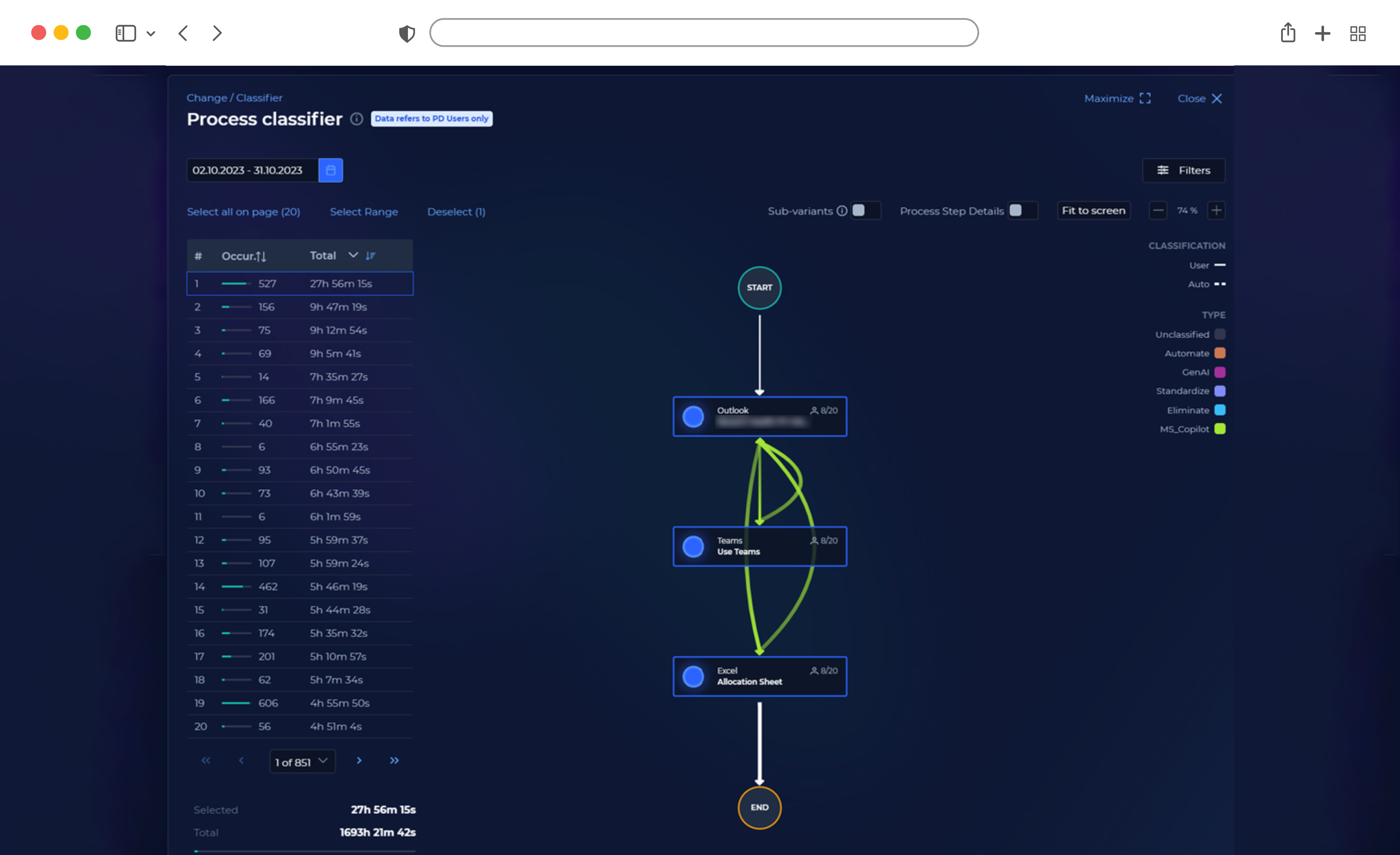
Pro Tip: Incorporate “cognitive ergonomics” into your workflow analysis. Consider not just the steps in a process, but how they impact mental load and decision-making quality.
Empathy-Driven Design: Explore the concept of “Empathy-Driven Workflow Design.” This approach considers the emotional and psychological aspects of work processes, not just their functional efficiency. By designing workflows that align with human needs and motivations, you can improve efficiency, job satisfaction, creativity, and overall organizational culture.
11. Kaizen
Kaizen’s principle of continuous improvement gains new power when combined with emerging technologies.
Cutting-Edge Approach: Implement “AI-Augmented Kaizen.” Use AI to continuously analyze processes and suggest improvements, but keep humans in the loop for creativity and context-aware decision-making.
Expert Advice: Create a “Kaizen AI Dashboard” that provides real-time suggestions for process improvements. This empowers employees at all levels to contribute to continuous improvement.
Cross-Pollination: Consider the concept of “Cross-Pollinating Kaizen,” where improvements from one area of the business are systematically shared and adapted across other areas. This approach can accelerate organization-wide learning and improvement, breaking down silos and fostering a more cohesive improvement culture. It can lead to unexpected innovations as ideas from one domain are creatively applied to another.
12. Business Process Outsourcing (BPO)
BPO has evolved from a cost-cutting measure to a strategic tool for accessing specialized skills and technologies.
Fresh Perspective: Explore “Ecosystem Outsourcing.” Create a network of specialized partners that can flexibly handle various aspects of your operations.
Key Tip: Use blockchain technology to create “trust-less” BPO relationships. Smart contracts can automate agreements and payments, reducing overhead and increasing efficiency in outsourcing relationships.
Collaborative Networks: Explore the potential of “Collaborative BPO Networks,” where multiple organizations share outsourced processes in a cooperative model. This approach can provide economies of scale, shared learning, and increased bargaining power with service providers. It can be particularly powerful for small to medium-sized businesses, allowing them to access capabilities typically reserved for larger corporations.
How process intelligence operationalizes process optimization
The 12 methods above are mature and proven. Most organizations that fail at process optimization do not fail because they chose the wrong method. They fail because the data each method requires is missing, incomplete or out of date. Process intelligence supplies that data layer.
KYP.ai is a Process Intelligence Platform built on three pillars: a 360° Enterprise View capturing real-time data across your organization’s people, processes and technology; a Business Transformation Engine that quantifies inefficiencies and calculates automation ROI; and an Agentic AI Enabler generating ready-to-execute agent code with structured business context. The table below maps each of the 12 methods to the specific data inputs process intelligence provides.
| Method | Data input required | What process intelligence supplies |
|---|---|---|
| 1. Lean | Identification of waste (overproduction, waiting, defects, motion) | Continuous capture of digital waste: redundant clicks, application toggling, unused tools, idle time, manual workarounds |
| 2. SIPOC | Accurate, current map of suppliers, inputs, process, outputs, customers | Live process maps derived from observed behavior, auto-updated as the process changes |
| 3. Process mining | Event logs from enterprise systems | All of the above plus desktop-level activity capture, closing the 70% knowledge-work gap that event logs miss |
| 4. Six Sigma | Variation data across process executions | Continuous capture of process variation: cycle time, exception frequency, peak performer vs. average performer gaps |
| 5. Value Stream Mapping | End-to-end flow of value from request to delivery | Cross-application, cross-system flow visibility including the manual handoffs that traditional VSM workshops miss |
| 6. Five Whys | Evidence trail to validate each “why” | Quantified impact data behind each candidate root cause |
| 7. 5S / 6S | Inventory of digital and physical tools, their usage and security state | Real-time application usage data, technology rationalization candidates, license utilization |
| 8. PDSA | Real-time measurement of plan-vs-actual outcomes | Continuous post-implementation monitoring that automates the Study and Act phases |
| 9. TQM | Quality data across every customer touchpoint | End-to-end customer-journey observation, exception detection, conformance to standard work |
| 10. Workflow analysis | Workflow execution data across distributed teams | Distributed-workforce visibility (Windows, macOS, Citrix, VDI) with on-device anonymization |
| 11. Kaizen | Continuous stream of improvement opportunities ranked by impact | ROI-prioritized opportunity pipeline, conversational AI interface for natural-language querying |
| 12. BPO | Quantified service-delivery performance and automation potential | Per-process benchmarks, automation candidates, peak-performer patterns replicable across geographies |
The pattern across the table is consistent. Every classical optimization methodology assumes data that most organizations cannot produce reliably from interviews, workshops or system logs alone. Process intelligence supplies it continuously, observed from actual work rather than self-reported activity, anonymized at source rather than aggregated after capture.
Three customer outcomes that demonstrate the data layer in action
Hollard: 307 hours per month saved on the ticketing triage process. Hollard’s improvement team had targeted ticketing for optimization but lacked operational data to act. Process intelligence revealed how top performers handled triage differently from peers. The case study describes the mechanism directly: “by learning how their top performers worked, they were able to boost productivity by 20%.” This is Kaizen in execution. The methodology was already in place. The missing layer was data.
Alorica: 952% ROI and $2.5M in annual savings. Alorica identified 26% automation potential across operations using process intelligence to baseline current state and rank automation candidates by ROI. This is BPO modernization and PDSA at scale. The 952% ROI came from acting on a prioritized pipeline rather than guessing.
SPS: 2,512 hours per month saved across CX, Finance, HR and SCM. SPS deployed process intelligence across 8,500 employees in 20 countries, quantifying 874 hours per month in CX, 599 in Finance, 496 in HR and 543 in Supply Chain Management. This is Value Stream Mapping and TQM at multinational scale. Manual VSM workshops cannot produce this picture in any reasonable timeframe; process intelligence produced it in weeks.
Why this matters for AI-augmented optimization
Several of the 12 methods (AI-Augmented Kaizen, Predictive Process Mining, Predictive Quality Management, Adaptive Workflows) explicitly invoke AI as the engine for continuous improvement. AI in this context is only as reliable as the data that grounds it. AI agents acting on documentation will hallucinate. AI agents acting on event logs will optimize the system-mediated 30% of work and leave the manual 70% untouched. AI agents acting on observed behavior, structured into business context, will perform reliably at enterprise scale.
KYP.ai’s Agentic AI Enabler closes this gap. It is the only platform on the market that generates production-ready agent code from observed process data, deployable on UiPath Studio, SAP Joule and Microsoft Copilot Studio without lock-in. See how to make enterprise agentic AI actually work with process intelligence and agentic AI and process intelligence.
KYP.ai: Pioneering AI-Driven Process Optimization
In this landscape of rapid technological advancement, KYP.ai stands at the forefront of modern process optimization. KYP.ai’s platform harnesses the power of advanced machine learning algorithms to analyze business processes in real-time, offering a dynamic, data-driven approach to optimization that transcends traditional methods.
KYP.ai’s seamless integration capabilities allow businesses to enhance their processes without disrupting current operations, embodying the concept of “Ecosystem Outsourcing” we discussed earlier.
Moreover, by empowering executive leaders with AI-generated insights, KYP.ai creates a powerful synergy between human expertise and machine intelligence, aligning closely with the “AI-Augmented Kaizen” approach.
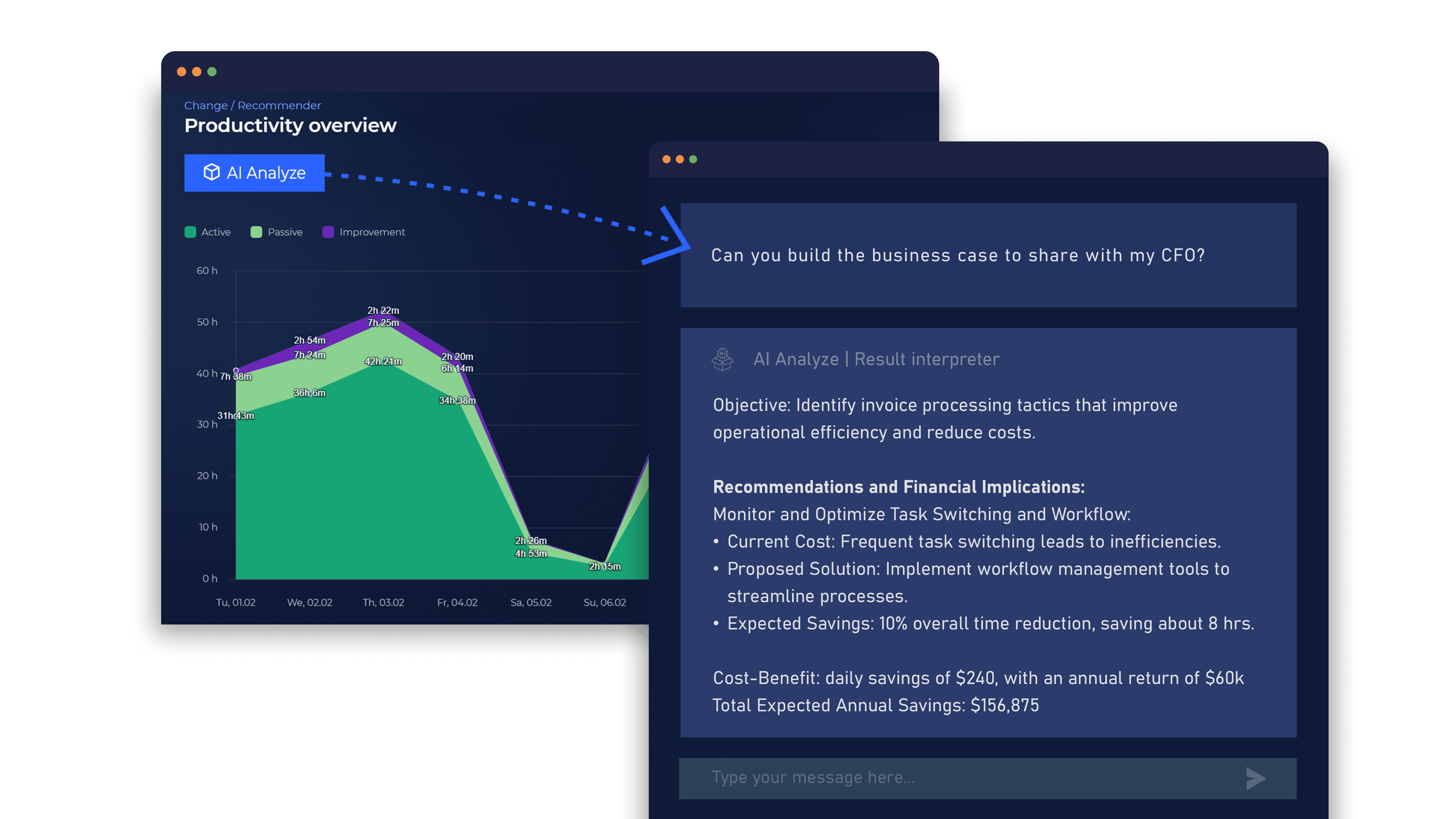
Unique Feature: KYP.ai’s “Process Optimization Recommender” uses advanced technology to analyze your unique business context and suggest the most effective optimization strategies from the ones we’ve discussed, tailored to your specific needs.
Holistic Optimization: KYP.ai’s platform doesn’t just optimize individual processes — it creates a learning ecosystem that continuously evolves and improves. By connecting insights across different processes and departments, KYP.ai can identify meta-patterns and system-level optimization opportunities that would be invisible when looking at isolated processes. This holistic approach can lead to transformative changes in how your entire organization operates.
Bottom line on process optimization in 2026
The 12 methods in this guide are not new. They have decades of operational evidence behind them and remain the canonical toolkit for any team serious about how work gets done. What is new in 2026 is the data foundation under them.
Traditional execution of these methods relies on interviews, workshops and consultancy engagements to produce a current-state picture that takes months to assemble, captures roughly 30% of how work actually happens and is out of date by the time it is published. Lean teams cannot eliminate waste they cannot see. Six Sigma programs cannot reduce variation they cannot measure. Kaizen efforts cannot improve processes whose actual execution patterns are invisible to the people supposed to improve them.
Process intelligence closes this gap. It captures observed human behavior continuously, anonymized at source, across every desktop and application. It supplies the specific data inputs each of the 12 methods requires: waste identification, variation measurement, bottleneck mapping, peak-performer patterns, automation candidates ranked by ROI. The methods stay the same. The economics of executing them change completely.
KYP.ai is the Process Intelligence Platform built specifically for this role: not as a replacement for established methodologies but as the continuous, evidence-based data layer that makes them work at enterprise scale. The platform also generates production-ready agent code from observed behavior, so the optimizations identified through these methods become the foundation for the next phase of enterprise transformation: autonomous AI agents executing the optimized workflows at scale.
For teams running serious optimization programs in 2026: the question is not which methodology to choose. The question is whether you are running those methodologies on assumptions about how work happens or on evidence. Book a demo with KYP.ai to see process intelligence as the data layer beneath your existing optimization program.
Get your process intelligence with the ROI attached - Book a demo!
Book Demo

 Wojciech Zytkowiak-Wenzel
 Szymon Kozak

 Adam Bujak
 Felix Haeser




 Mariusz Mroz