Advancements in Generative AI (GenAI) and other technologies give organizations new ways to improve. Unlike previous automation waves focused on cost or resource cutting, Productivity Intelligence helps organizations understand how the people behind the work can be most efficient.
This forward-thinking approach optimizes workforce capabilities and reveals hidden opportunities for improvement at all organizational levels by leveraging advanced, data-driven insights. Higher productivity means more output from the same amount of input, generating better results without additional effort.
Recent research from Accenture emphasizes that “Technology and GenAI are at the heart of productivity reinvention.” New technical capabilities like agentic AI and more experienced implementations drive rapid adoption.
In this article, we examine how Productivity Intelligence improves workforce efficiency. We also share key strategies for using data-driven decisions in your daily work.
Understanding Productivity Intelligence
Productivity measures the effort invested in work to the value created. While it emerged from manufacturing (inputs to outputs = productivity), it has evolved into a common term for employee efficiency. Deloitte’s State of Generative AI in the Enterprise noted that leaders want better efficiency, productivity, and lower costs.
A continuous challenge for organizations is the ability to measure and then improve productivity. Some organizations consider productivity a 9-5 shift where KPIs are regularly met. Others are more dynamic in their calculations, integrating dynamic, transactional pricing or optimized bonuses based on outcomes to their definition of productivity.
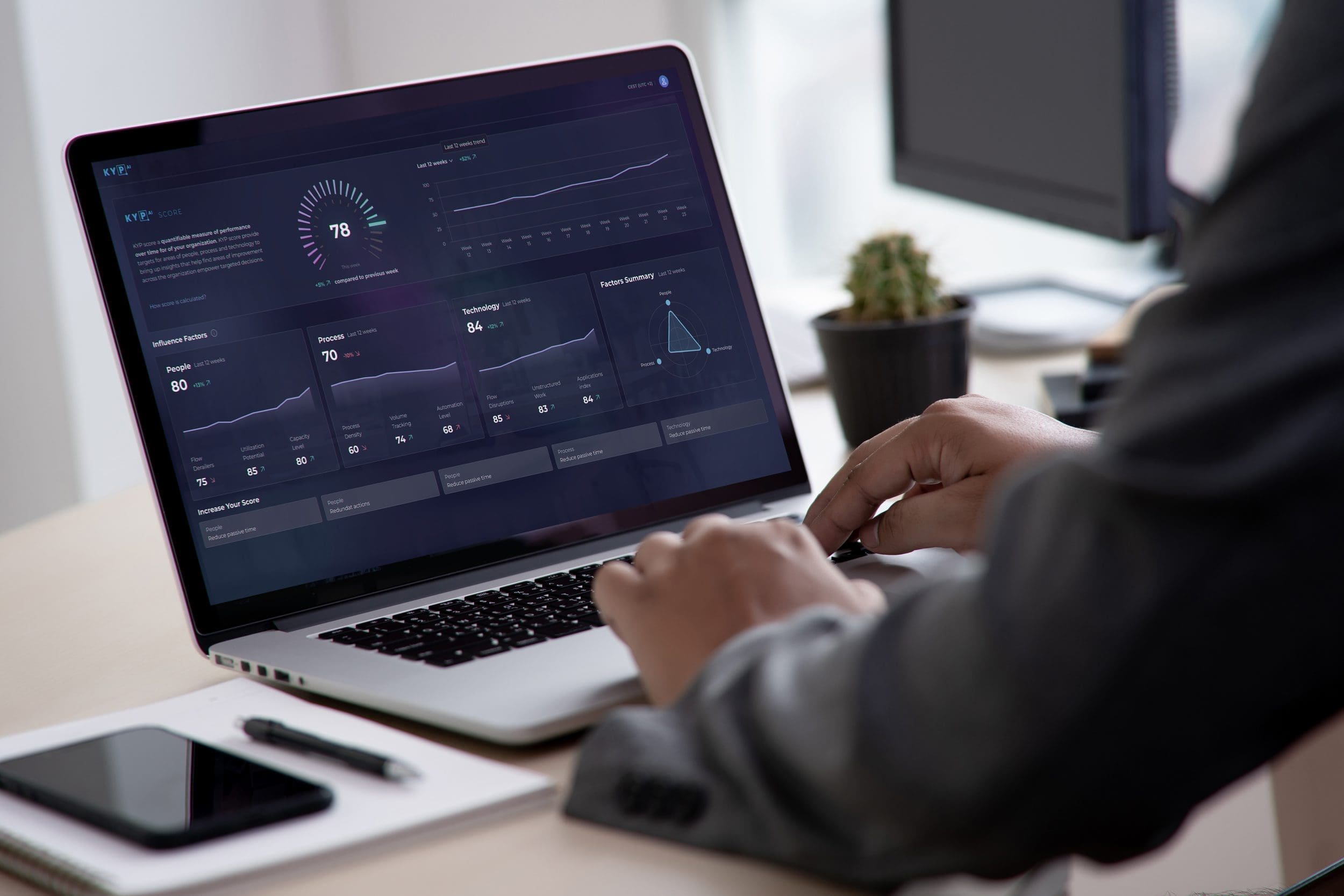
In all productivity use cases, organizations must understand:
- what to measure
- where to get the data
- how to communicate findings with employees.
Productivity Intelligence specifically focuses on a more comprehensive angle of an organization beyond traditional task or process mining techniques. It captures and analyzes data on how the workforce, processes, and technologies can be better connected. For many enterprises, this trifecta redefines how businesses achieve growth and efficiency.
From Task Mining and Process Mining to Productivity Intelligence
Task Mining
Task mining technology has seen continued interest over the last few years. Google Trends shows that search volume hit its 5-year peak in October 2023, with high search volume in February and March 2024.
One benefit that makes task mining valuable for organizations is its ability to track individual and team tasks. It replicates user interaction data, capturing what happened during these tasks. Task (and process) mining may even eliminate the need for lengthy interviews for process streamlining or Value Stream Mapping.
Task mining pieces together a part of a process. It captures activities on a person’s desktop through screenshots, keystrokes, and other metadata sources. Algorithms and advanced AI then summarize what happened.
Organizations often use task mining to find repetitive processes that are good candidates for Robotic Process Automation (RPA). This helps remove inefficiencies or bottlenecks that reduce productivity and develop best practices and workflows.
Task mining is very valuable for organizations that want to understand the granularity of a business process. Yet, it often needs to support the bigger picture. People working on digital transformation or business process improvements must identify inefficiencies across the entire organization or department and prioritize what to change.
Task mining is excellent for processes with pre-defined, static parameters. However, to get the most benefits, we must also consider the human, technology, and process layers. These layers are affected in ways that go beyond just the task. Task mining is also typically limited to a specific period or process. It focuses on the micro details, understanding the granular nuances of how somebody completed a part of their job. Still, it needs a dynamic, multivariate lens to solve complex business problems.
Process Mining
Grandview Research says the process mining market will grow by 50.1% each year from 2021 to 2028. This growth is nearly three times the average rate!
Unlike task mining, which covers the ‘front-end’ or desktop process data, process mining uses event logs to stitch together how work is done.
It uses software logs and other backend data to show the steps in a business process. This can include an invoice process, a customer support ticket, or end-of-month closing tasks.
The collected information helps organizations find areas that need improvement. They can then make changes to ensure their performance is at its best. Once these workflows are optimized, organizations can see more streamlined processes, less rework, and, ideally, substantial savings.
Many organizations want to go all in with process mining. They instantly understand the benefits of better visibility and process improvements. However, one of the top reasons that process mining projects fail is a need for a lack of process maturity and strategic misalignment. Just because you capture how a process was completed does not mean it’s how it should be done. Even if you find inefficiencies, knowing how to fix them for significant improvements can be a common challenge. How can you translate data discoveries into profitable business outcomes?
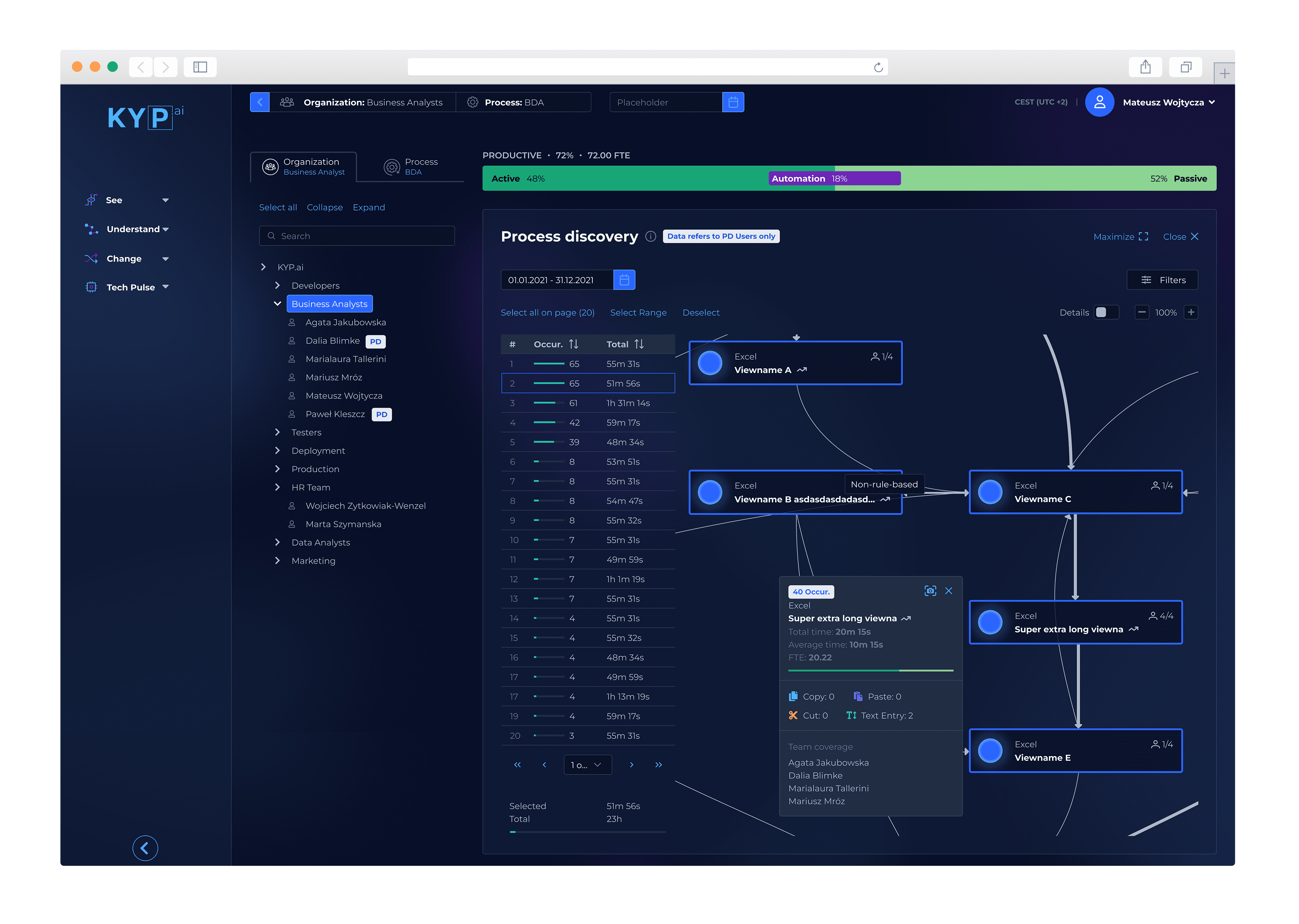
Organizations that want to see the most substantial ROI and change in behavior must understand their operations. What technology is causing friction in daily work? Where are my teams under or over-utilized? Process mining will not answer these questions for you.
The good news is that productivity intelligence will.
What is Productivity Intelligence?
Productivity Intelligence helps organizations better understand their operations, capturing work pattern data to prioritize and drive ongoing success with data analytics and AI.
Productivity Intelligence extends process and task mining in three critical ways.
- Productivity Intelligence captures the granularities of task mining and the process steps that process miners bring. It also integrates additional data sources, including application usage, metadata, and workforce patterns.
- It shifts from solely recording past events to helping with real-time decision-making and future predictions. It also adds GenAI for smarter conversations with your collected data.
- Productivity Intelligence comprehensively views work across teams, processes, and systems. This multidimensional view provides a holistic understanding of organizational operations, enabling leaders to make informed, data-driven decisions.
Key Benefits for Business
Strategic Prioritization
Combining processes, tasks, and big data with advanced AI lets you see what is happening in the organization. You can also learn how to fix issues and what to focus on first.
You also have more insights into the human dimensions of work. When are people most efficient? Should they have additional breaks? Are they more productive at the office or with remote work?
Productivity Intelligence collects data from the workforce, processes, and technology. This gives a clear view of how tasks are done. It shows where improvements can be made and suggests new ways to optimize. This practical approach allows for strategic prioritization, enhanced understanding of human work patterns, and comprehensive insights into organizational operations, improving efficiency and productivity.
Furthermore, nurturing a culture of adaptability and continuous improvement empowers employees to contribute actively to growth objectives. Strategic planning and optimized resourcing help businesses reach their full growth potential, ensuring lasting success in a changing environment.
Operations Steering
Productivity Intelligence reveals inefficiencies and identifies patterns and trends that traditional task mining might overlook. This broader perspective is essential for optimizing workforce capabilities and uncovering hidden opportunities for improvement.
Maximizing growth potential in today’s dynamic business landscape demands strategically integrating data and technology. Productivity Intelligence plays a pivotal role in guiding real-time operations.
Leaders need to know what is happening in real-time and how to solve it. Productivity Intelligence provides data on dynamic employee utilization, problematic process gaps, and a general pulse of team performance.
As businesses adopt these new strategies, they position themselves to meet current demands and anticipate future trends, ensuring a resilient and forward-thinking approach to navigating the complexities of the modern business landscape.
On-Demand GenAI
Given how tumultuous businesses are, there will always be on-the-fly questions and demands. With a digital core from a Productivity Intelligence platform, you can access operational data to make decisions at any time.

Gen AI data goes beyond dashboards. It can interpret complex questions by quickly mining your operational data. Executives use this interface to help build business cases, understand critical points to cover in a stakeholder meeting, and determine the most relevant productivity techniques from dynamic, timely data. The power lies in its encapsulation of primary and secondary data, bringing you the most robust information available to layer upon your intrinsic knowledge.
Conclusion
Businesses can pinpoint improvements across their operations by gathering and analyzing data from diverse sources. This approach transcends identifying problems; it helps determine the ideal workforce, technology, and processes to drive operational efficiency.
Continuous, data-driven insights enable organizations to continuously improve using workflow patterns, which can proactively address any concerns. Such insights guide strategic decisions, empowering leaders to implement targeted improvements and allocate resources more effectively. With data-driven insights and detecting deviations from standard processes, organizations can accomplish sustained efficiency, enhance productivity, and lay a strong foundation for innovation and growth in the competitive business landscape.
As businesses pursue greater efficiency, transitioning from task mining to Productivity Intelligence becomes pivotal in achieving sustained growth and success.
Productivity Intelligence drives immediate performance gains and prepares organizations for long-term success and adaptability in a rapidly changing business environment.
Productivity Intelligence optimizes individual performance and drives collective success, positioning the workforce as a pivotal component of business growth.
This leads to reduced cycle times and more efficient use of resources. Moreover, Productivity Intelligence provides insights into process compliance and adherence to standard operating procedures, ensuring consistent quality and performance. It also facilitates better coordination across departments by breaking down silos and fostering a more integrated approach to operations.
Businesses can automate routine tasks by deploying advanced analytics and automation tools, freeing time for strategic initiatives. This holistic view enables organizations to optimize resource allocation and improve operational agility. Streamlining operations through Productivity Intelligence enhances productivity and enables companies to respond more effectively to market demands and opportunities.
Ultimately, leveraging technology through Productivity Intelligence is about keeping pace and setting a direction for sustainable growth and innovation.
Discover Your Productivity Potential – Book a Demo Today
Book Demo
 Kamil Newczynski
 Adam Bujak


 Wojciech Zytkowiak-Wenzel
 Frank Scheuble
  Miroslaw Bartecki